Stamp Duty Changes 2026: What UK Investors Need to Know
- The nil-rate band for home movers stays at £250,000; above that you pay 5% on the next slice.
- Stamp duty on second homes and buy-to-lets attracts a 5% surcharge on top of standard rates.
- First-time buyers get a higher nil-rate band of £425,000 on properties up to £625,000.
- Always verify your exact liability using a current SDLT calculator before you commit.
Every property investor pays stamp duty at some point, yet it is surprising how many people estimate their bill rather than calculate it exactly. A wrong guess can add thousands to your purchase cost — or leave you scrambling for extra funds on completion day. The 2026 rates are stable, but the thresholds and surcharges still reward anyone who checks before they bid.
Below is a practical breakdown of what has changed, what has not, and how to factor SDLT into your deal analysis without running into surprises.
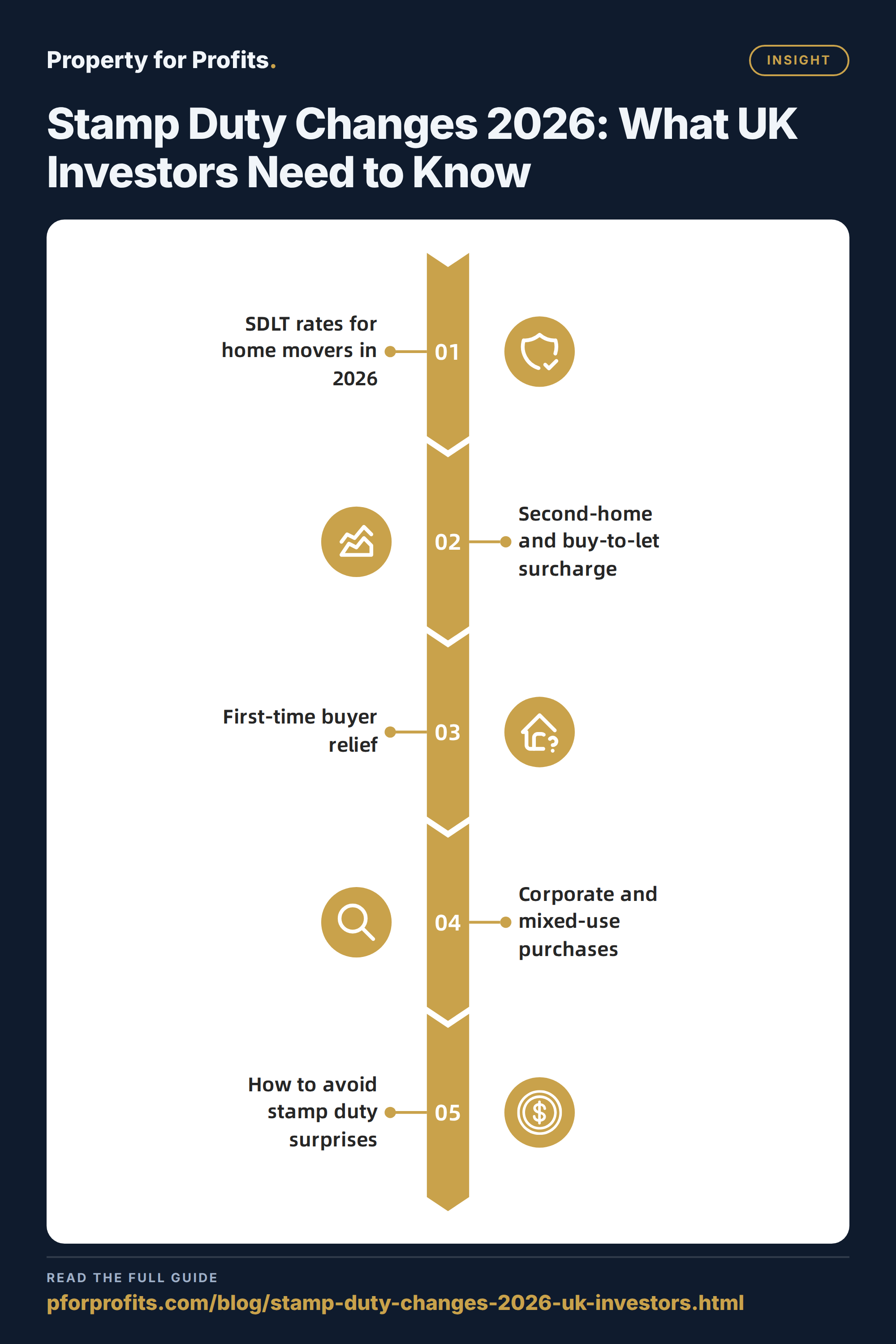
SDLT rates for home movers in 2026
For owner-occupiers who already own a home (or have owned one before), the standard residential rates apply. The first £250,000 of the purchase price falls within the nil-rate band — meaning you pay nothing on that portion. Above that, the rates are progressive:
- £0 – £250,000: 0%
- £250,001 – £925,000: 5%
- £925,001 – £1,500,000: 10%
- Over £1,500,000: 12%
These rates apply to freehold and leasehold residential purchases in England and Northern Ireland. Scotland and Wales operate their own land transaction taxes with different bands, so this guide covers the UK-wide investor picture but you need territory-specific numbers for deals outside England.
Second-home and buy-to-let surcharge
The 5% SDLT surcharge for additional properties remains in force. That means a buy-to-let investor or second-home buyer pays 5% on the first £250,000 (instead of 0%), then 10% on the next band, and so on.
On a £300,000 buy-to-let, the calculation looks like this:
- First £250,000 at 5% = £12,500
- Remaining £50,000 at 10% (5% standard + 5% surcharge) = £5,000
- Total SDLT bill: £17,500
Compare that to a home mover buying the same £300,000 property, who would pay just £2,500 (5% on the £50,000 above the nil-rate band). The surcharge makes a material difference to your upfront cash requirement and should be factored into every deal before you set your maximum bid.
First-time buyer relief
First-time buyers purchasing a property for up to £625,000 benefit from a higher nil-rate band of £425,000. On a property priced at or below that threshold, the saving can be up to £11,250 compared to a home mover paying standard rates.
For investors helping family members onto the ladder, or buying in their own name for the first time, this relief is valuable — but it only applies if you (and anyone you are buying with) have never owned a property before, anywhere in the world.
Corporate and mixed-use purchases
If you buy through a company or purchase a mixed-use property (for example, a shop with a flat above), the rates are different. Commercial and mixed-use transactions use a separate SDLT regime with a 0% band up to £150,000 and lower top rates. That structure can make corporate or mixed-use acquisitions cheaper from a stamp duty perspective, which is one of the reasons investors look at shop-with-flat deals and other hybrid structures.
There is no additional 5% surcharge on mixed-use purchases, which can create a meaningful saving compared to buying a pure residential second home. If you are considering this route, model both the residential and mixed-use figures to see which structure works best for your specific deal.
How to avoid stamp duty surprises
The most common mistake investors make is calculating SDLT on the wrong basis — using the standard rates when they should include the surcharge, or assuming first-time buyer relief applies when it does not. A few practical checks:
- Confirm your buyer status. Are you a home mover, first-time buyer, additional property buyer, or corporate purchaser? Each one uses a different rate set.
- Check the property type. Residential, mixed-use and commercial each have their own SDLT rules. A property marketed as "residential" may have commercial elements that change the calculation.
- Factor SDLT into your maximum bid. If your budget is £300,000 all-in, a £17,500 stamp duty bill means you can only offer £282,500. Work backwards from your total available cash.
- Run the calculator before every offer. Thresholds and reliefs change. Verify your exact liability using our Stamp Duty Calculator — it accounts for buyer type, purchase price and property type so you get the right number every time.
Stamp duty is a fixed cost you cannot negotiate away, but you can plan for it accurately. The difference between guessing and calculating is often thousands of pounds — money that could otherwise go towards your refurb budget, your deposit on the next deal, or simply stay in your pocket.
For a full picture of the costs involved in any property purchase, pair your SDLT estimate with our BRRR calculator to model refurb costs and refinance figures, or the deal analyser for a complete cashflow and return projection. Every number you lock in before you bid is one less surprise on completion day.