BRRR Explained: Recycle Your Cash and Buy Again
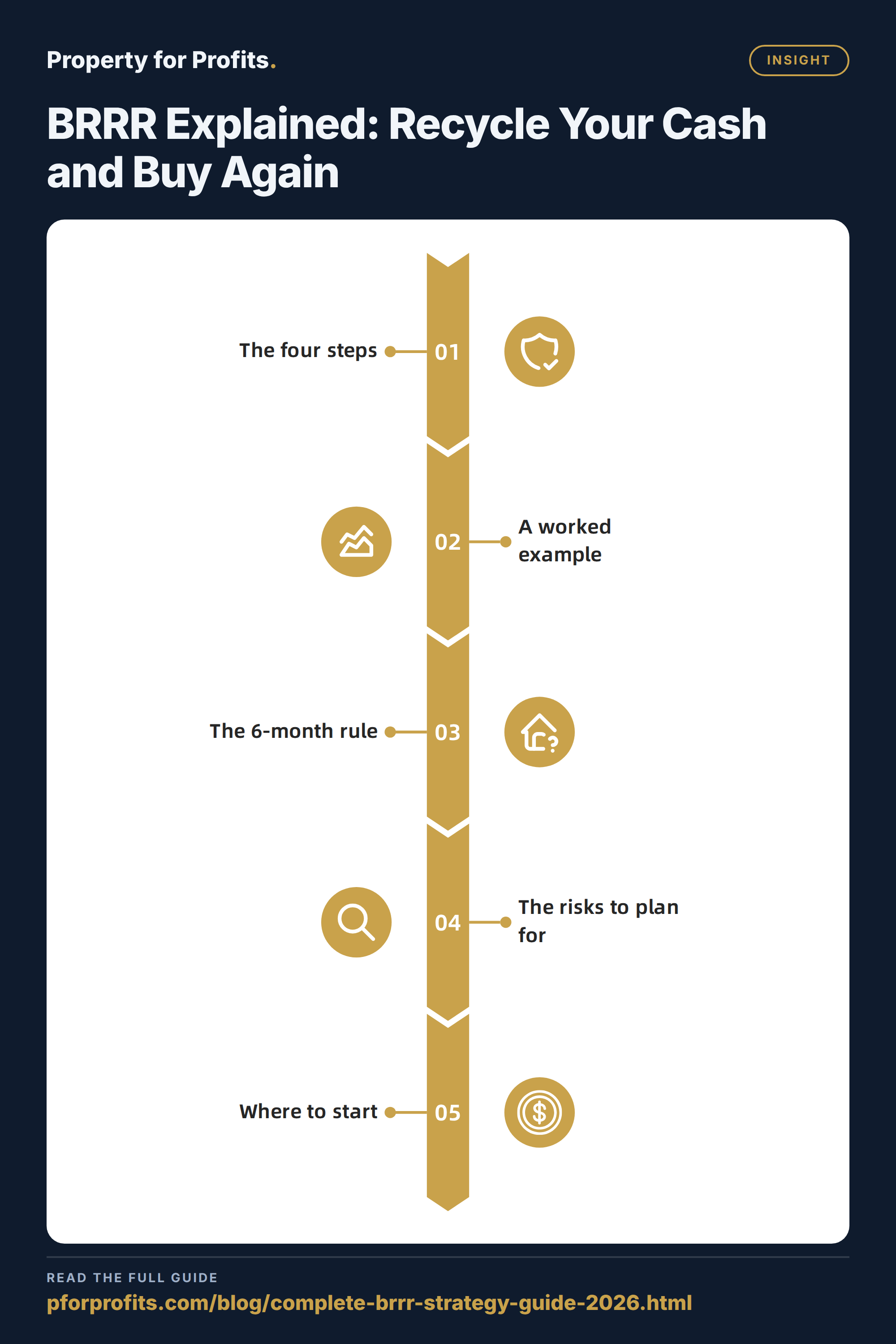
- Buy below market value, add value through refurb, then refinance against the higher figure.
- A common worked example leaves only a few thousand pounds stuck in the deal.
- Most lenders apply a roughly six-month wait before they value at current worth.
- The real risks are down-valuations, refurb overruns and rate rises — plan for all three.
BRRR is the strategy that lets you grow a portfolio without needing a fresh deposit every time. You Buy a property below its true value, Refurbish it to lift that value, Rent it to a tenant, then Refinance against the new, higher valuation to recycle most of your cash back out — ready for the next deal.
Done well, the same lump of money buys property after property. Done carelessly, it leaves cash stranded and stress on your cashflow. Here is the whole cycle in plain English, with the numbers and the pitfalls.
The four steps
Buy
Everything starts here. You buy below market value, usually a tired or problem property that scares off ordinary buyers. The discount is your margin, so the harder you buy, the more you can recycle later. This is also where most deals are won or lost.
Refurbish
You add value through works — modernising, reconfiguring, fixing structural or cosmetic issues. The aim is to lift the property's market value by more than the refurb costs, manufacturing equity rather than waiting for the market to hand it to you.
Rent
You let the finished property to a tenant. A let property producing reliable income is what a refinance lender wants to see, and the rent must comfortably cover the new mortgage. If it doesn't, the deal doesn't work, however good the uplift looks.
Refinance
You remortgage against the new, higher valuation — typically up to around 75% loan-to-value — and the new loan pays off your original finance and releases most of your cash. That released cash becomes the deposit for the next purchase, and the cycle repeats.
A worked example
Numbers make BRRR click, so here is a clean illustration:
- Buy price: £120,000
- Refurb cost: £35,000
- Total cash in (before fees): £155,000
- Gross development value (GDV) after works: £200,000
- Refinance at 75% of GDV: £150,000 released
- Cash left in the deal: roughly £16,000 once buying and finance costs are included
You started by committing £155,000, the refinance hands back £150,000, and after the costs of buying and refinancing you are left with around £16,000 stuck in a property now worth £200,000 — one that also cash-flows from rent. Recycle most of your capital, keep an income-producing asset, and move on to the next one. That is the BRRR promise. To pressure-test figures like these on your own deal, run them through our BRRR calculator before you offer.
A "perfect" BRRR that pulls out every penny is the exception, not the rule. A deal that leaves a few thousand in and still cash-flows is a genuinely good result.
The 6-month rule
One detail trips up beginners. Many lenders will only remortgage based on a property's current market value once you have owned it for at least six months. Refinance sooner and some will lend only against what you paid — which would trap all the value you just created.
That is why most BRRR investors plan to refinance from around the half-year mark, timing the works and the let to be complete and seasoned by then. Lender criteria vary, so confirm the specific requirements with your broker before you build a timeline around them.
The risks to plan for
- Down-valuation. The surveyor values your finished property below your GDV figure, so the refinance releases less and more cash stays stuck. Defend against it with realistic, independently-sourced comparables, not optimism.
- Refurb overruns. Costs and timelines slip — it is the norm, not the exception. Get works properly priced, hold a contingency, and never spend the contingency before you need it.
- Rate rises. A higher rate at refinance squeezes the post-deal cashflow. Stress-test the numbers at a rate above today's so a rise cannot turn a profit into a loss.
Each of these is manageable if you plan for it and brutal if you don't. The common thread is conservative underwriting: assume the valuation comes in lighter, the works cost more and the rate is higher than you'd like, and only proceed if the deal still works.
Where to start
BRRR lives or dies at the buying stage, because the discount you secure is the equity you'll later recycle. If you're not yet confident sourcing below-market stock, start with our rundown of the best ways to find below-market deals — the right raw material makes every later step easier. Get the buy right, refurbish sensibly, let well and refinance conservatively, and BRRR becomes a repeatable engine for building a portfolio from a single pot of cash.